Prime London
Why prime London: read the place, then the property
The appeal of an established neighbourhood is only the beginning. Its buildings, uses and potential make the individual property worth understanding.

Architectural illustration
A place with a clear identity
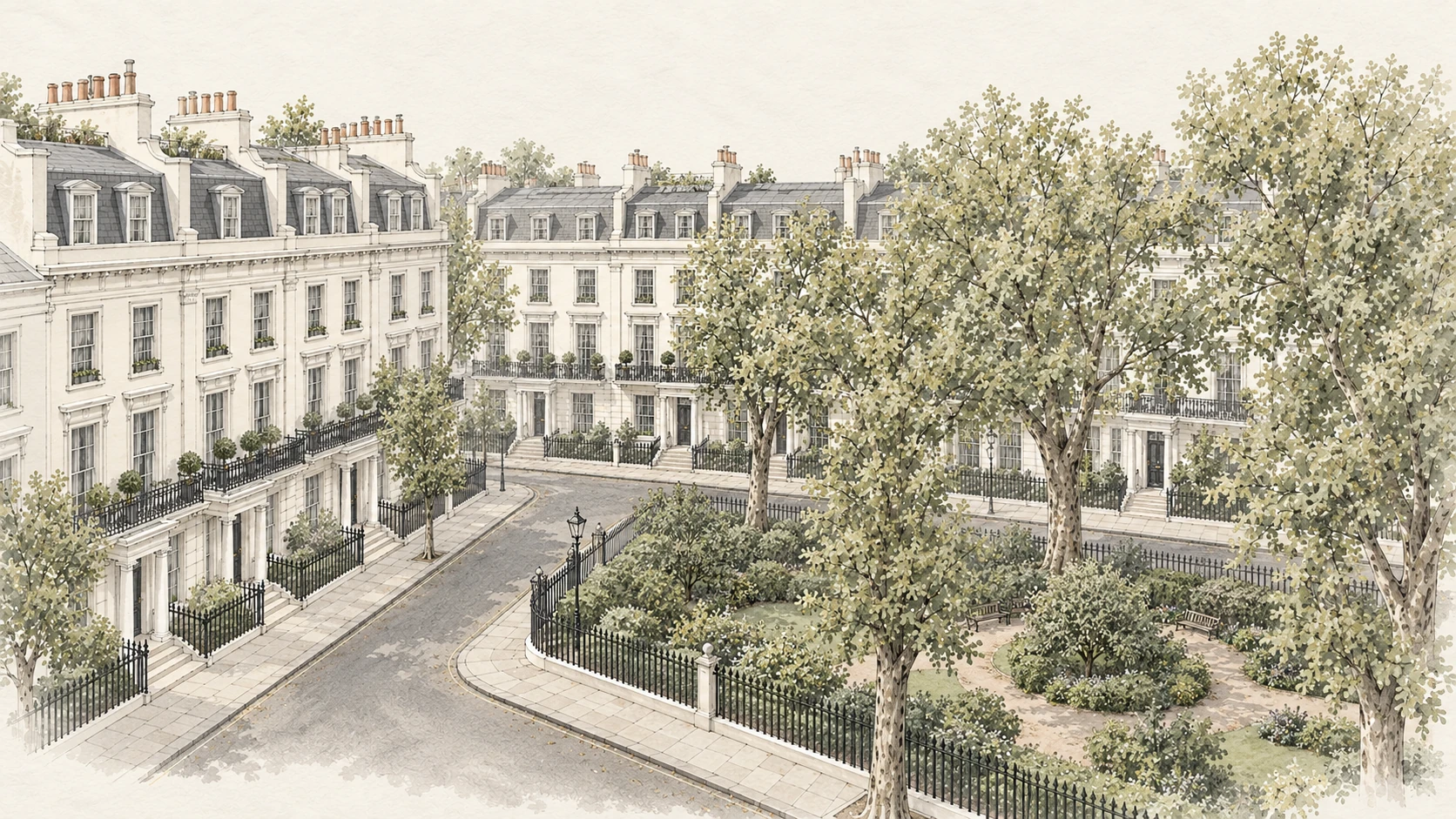
Our interest in prime London begins with the quality of its places: established streets, varied building types, green space and the relationship between homes and the life of the city. For an owner, these qualities provide a concrete starting point for deciding where and what to buy.
The London Plan recognises the importance of central London's mix of office, cultural, entertainment and tourism functions, alongside its distinctive environment and heritage. That mix helps explain the appeal of looking at property here. The relevant question for an acquisition is how a particular address connects with the uses and places that matter to its intended occupier.
Sources: London Plan 2021: Spatial Development Patterns, Policy SD4
Character belongs in the appraisal
A neighbourhood's character comes from more than its best-known landmark. Kensington and Chelsea's appraisal of the Kensington Palace Conservation Area describes the contribution of building settings, architecture, materials, views, trees and green space. It shows why two properties close to one another can offer very different experiences.
For us, that makes the street, approach and outlook part of the property assessment. A useful layout, comfortable rooms and a good relationship with outside space have a purpose beyond a photograph: they shape how a building can be occupied.
Sources: RBKC: Kensington Palace Conservation Area Appraisal, June 2025
The potential of what is already there
Existing buildings invite a more precise kind of development question. Which parts work well? Where is space being used poorly? Can a change in arrangement improve the building without losing its character? The answers need to be tested against condition, cost, programme and the intended use.
The London Plan places heritage and context within planning and design. Local policy and the circumstances of the building therefore belong in the early review of proposed changes. Architectural judgement becomes useful when it connects spatial potential with what can be delivered.
One city, different objectives
An owner seeking a long-term property holding will ask different questions from someone planning an improvement project or assembling a portfolio. The purpose of ownership gives the search and appraisal their direction. It also determines the level of involvement and professional support required.
Purchase costs need the same attention. HMRC's guidance distinguishes between different buying circumstances, including additional-property, non-resident and company purchases. The ownership arrangement and transaction should be reviewed with the relevant advisers as part of the acquisition brief.
Sources: HMRC: Stamp Duty Land Tax — residential property rates
From interest to a clear brief
Our view is that the strongest reason to examine prime London is the opportunity to understand a specific building in a distinctive setting, then make a considered plan for it.
Rubrics Projects connects that early assessment with property sourcing, development management and continuing oversight. The starting point is your objective; the next step is establishing the property work needed to achieve it.
Sources and further reading
Read the evidence.
- London Plan 2021: Spatial Development Patterns, Policy SD4
- London Plan 2021: Heritage and Culture, Policy HC1
- RBKC: Kensington Palace Conservation Area Appraisal, June 2025
- HMRC: Stamp Duty Land Tax — residential property rates
Sources checked 19 October 2026. This article is general commentary; the facts and constraints of a particular property require their own assessment.